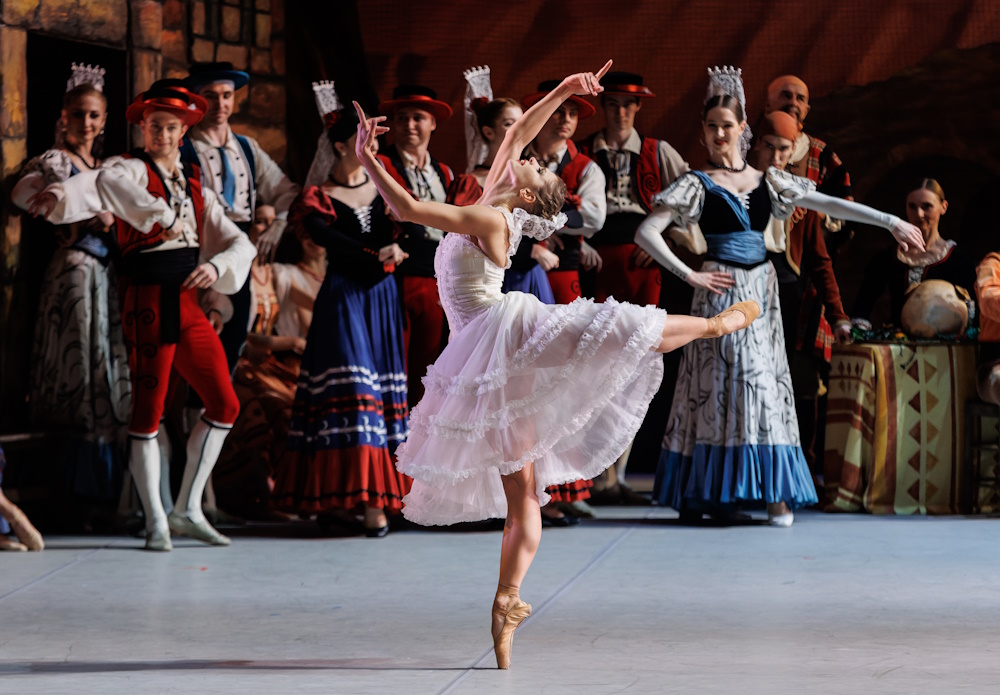
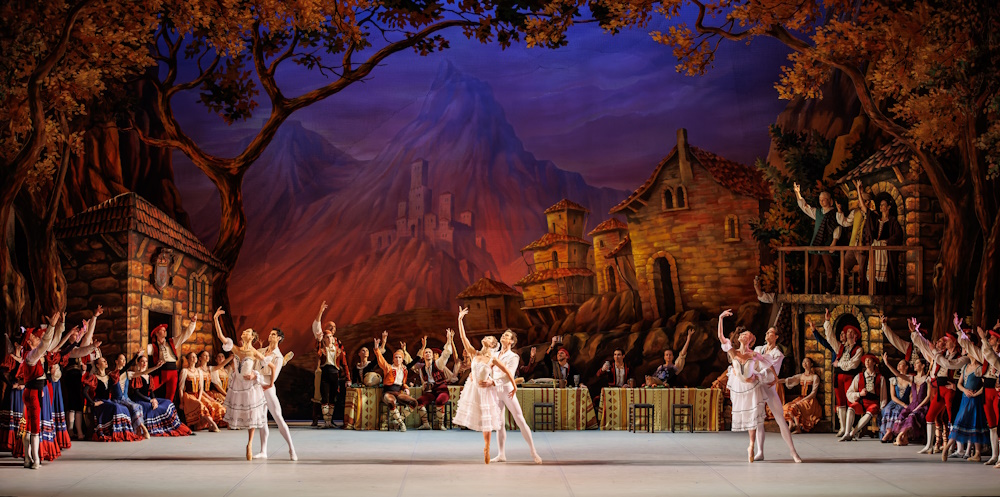
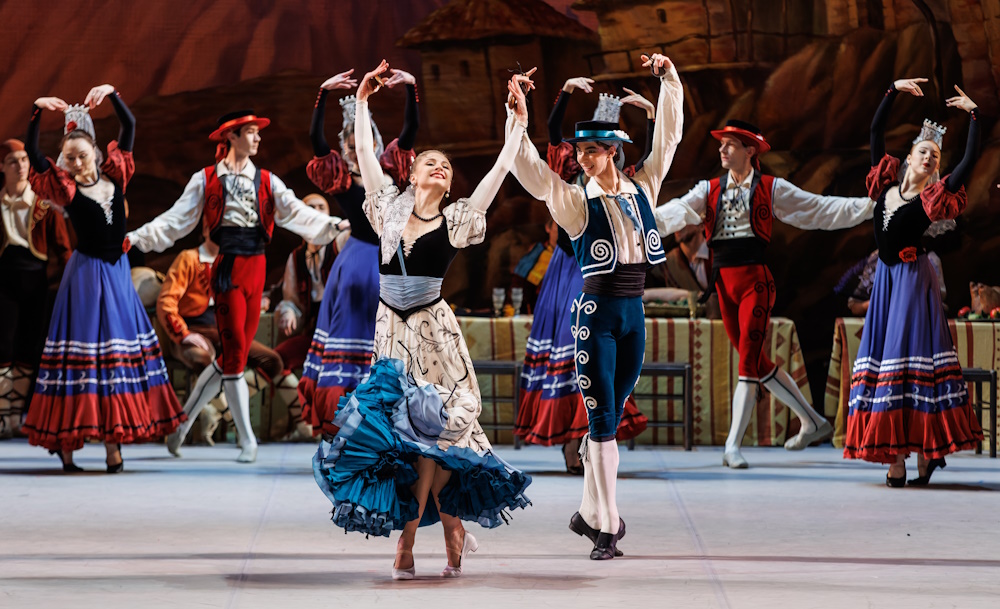
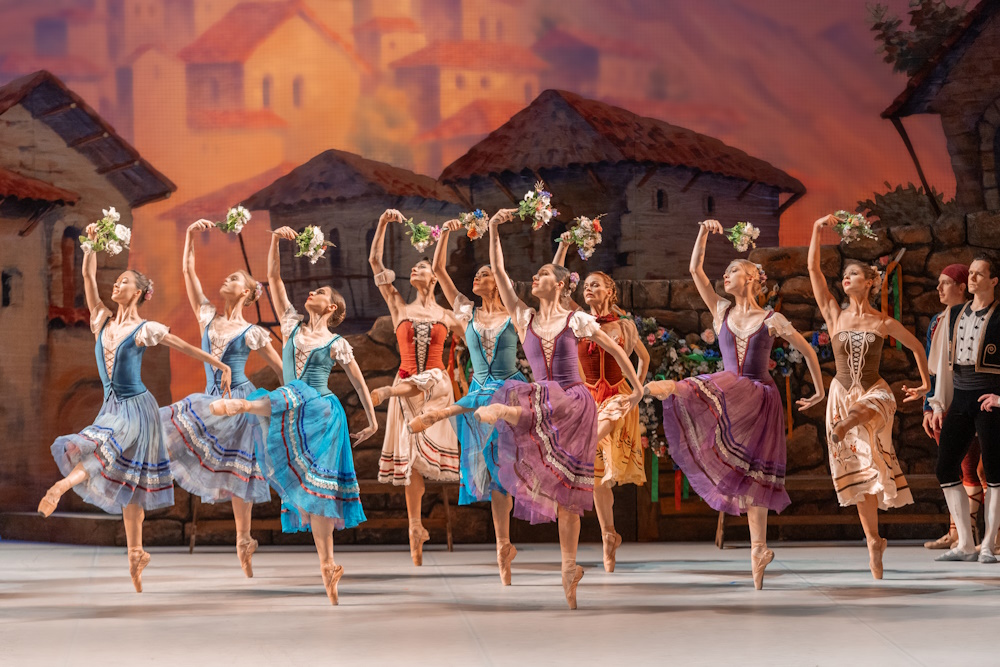
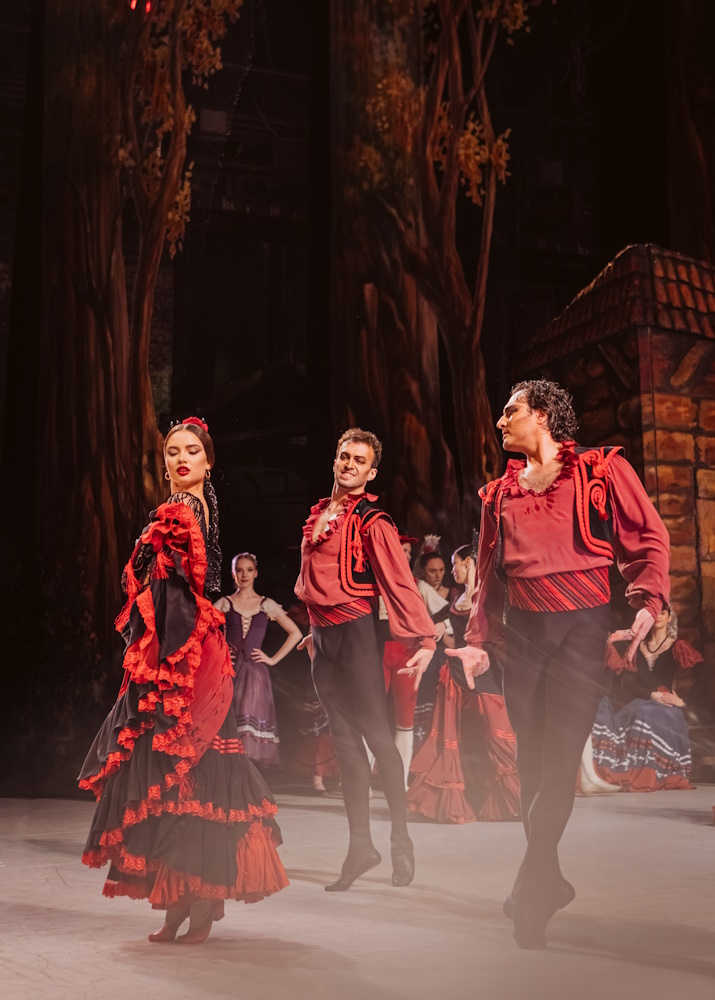
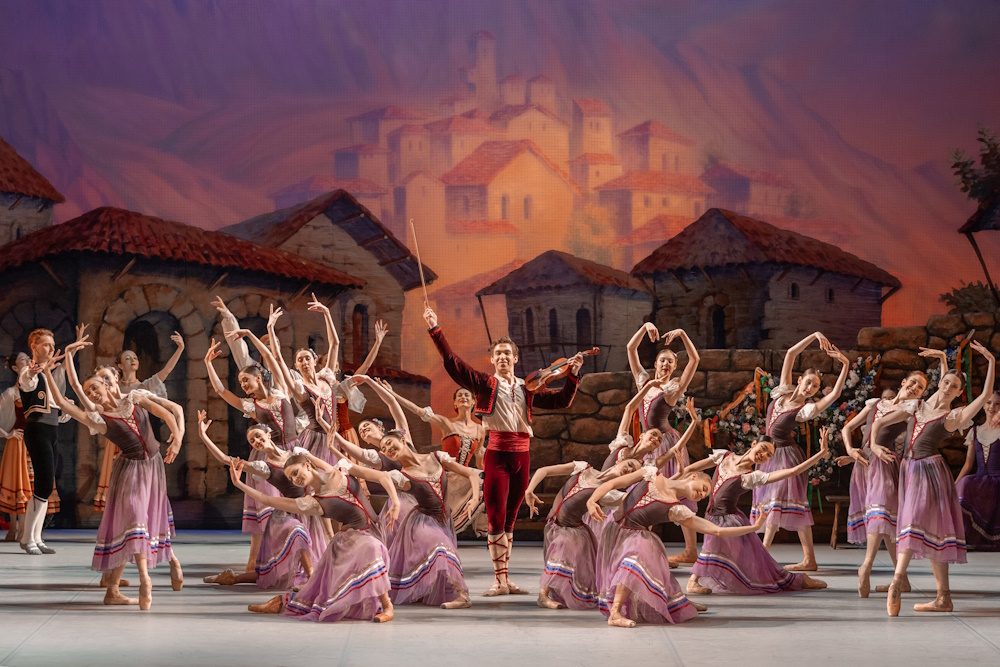
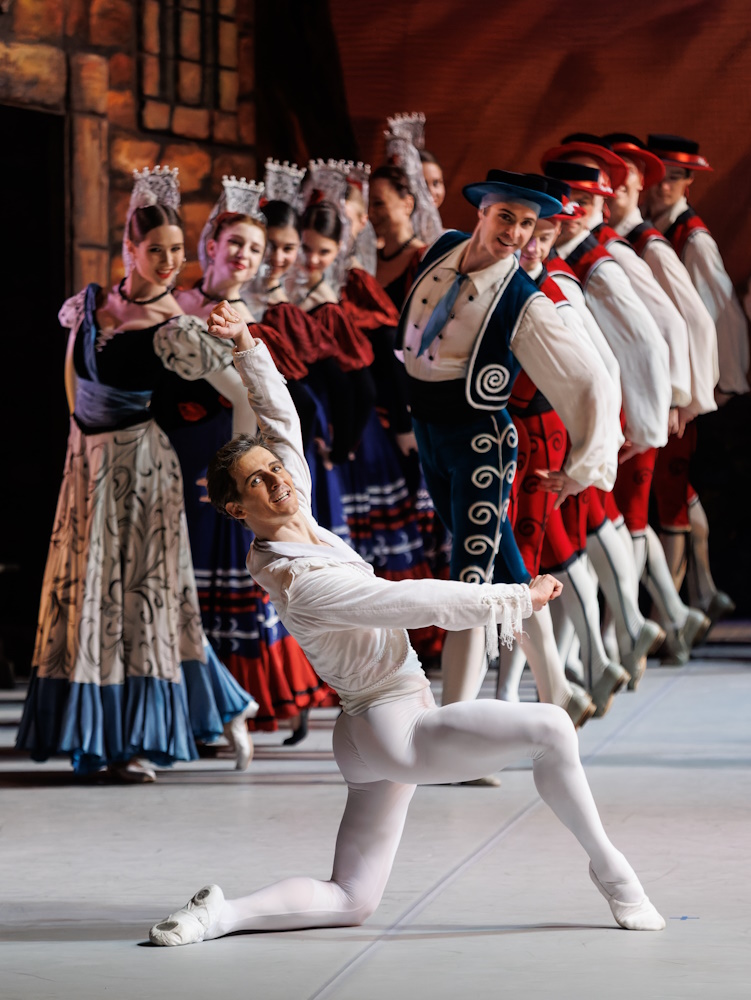
In the very heart of St Petersburg stands the historic Mikhailovsky Theatre, one of the city’s most distinguished stages for ballet and opera. Its company unites remarkable dancers, many of whom have appeared at the legendary Mariinsky Theatre and trained in the same renowned academies that shaped generations of Russian ballet stars. The passionate ballet Laurencia, based on the play Fuenteovejuna by Lope de Vega, bursts onto the stage with fiery Spanish spirit and dramatic power. Set to the vivid score of Alexander Krein, the production combines brilliant virtuosity, expressive ensemble scenes and a story of courage, justice and freedom. It is a ballet of striking energy, where classical technique meets the passionate rhythm of Spain.
Stage version after Lope de Vega’s play Fuente Ovejuna
Music revised for the Mikhailovsky Theatre
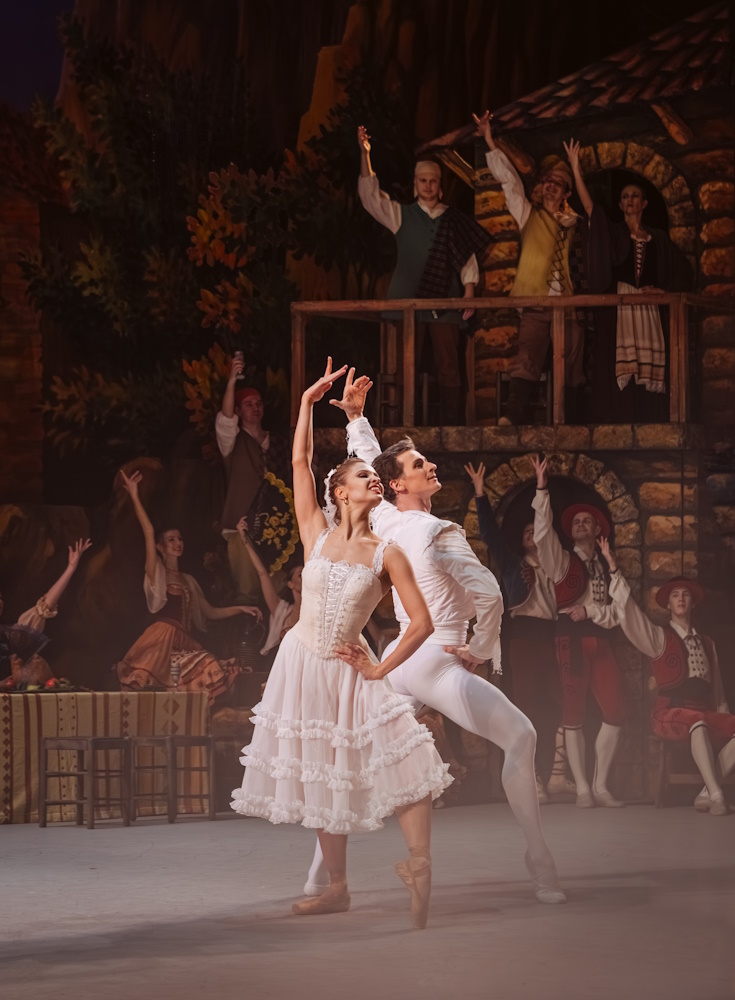
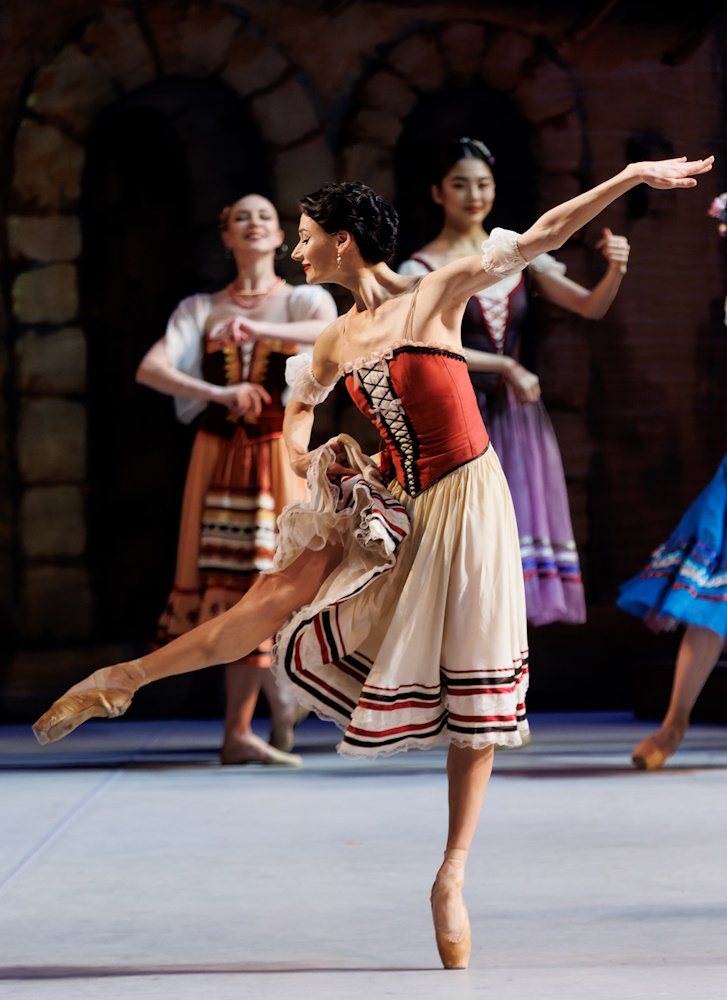
“Laurencia” is an extraordinarily spectacular performance, in which the emotional intensity and speed of the action are conveyed by a bright dance language. Classical steps in “Laurencia” are combined with fiery Spanish rhythms. Virtuoso solos and duets, harmonious ensembles, exciting crowd scenes help unfold a dramatic story based on the play by the Spanish playwright Lope de Vega “The Sheep Spring”.
Synopsis
Act one
Scene one
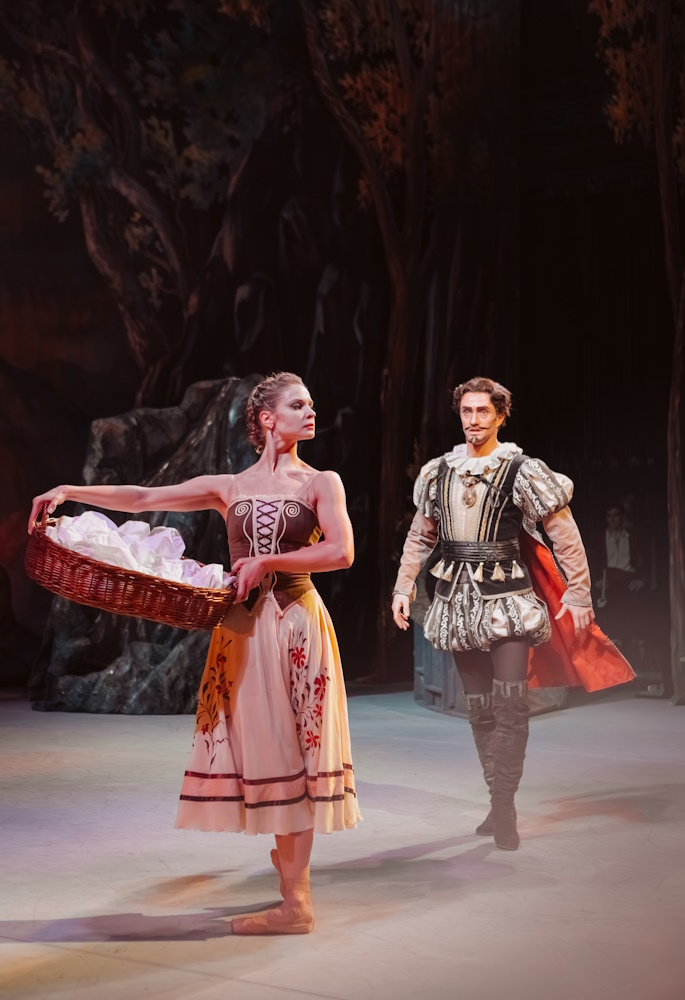
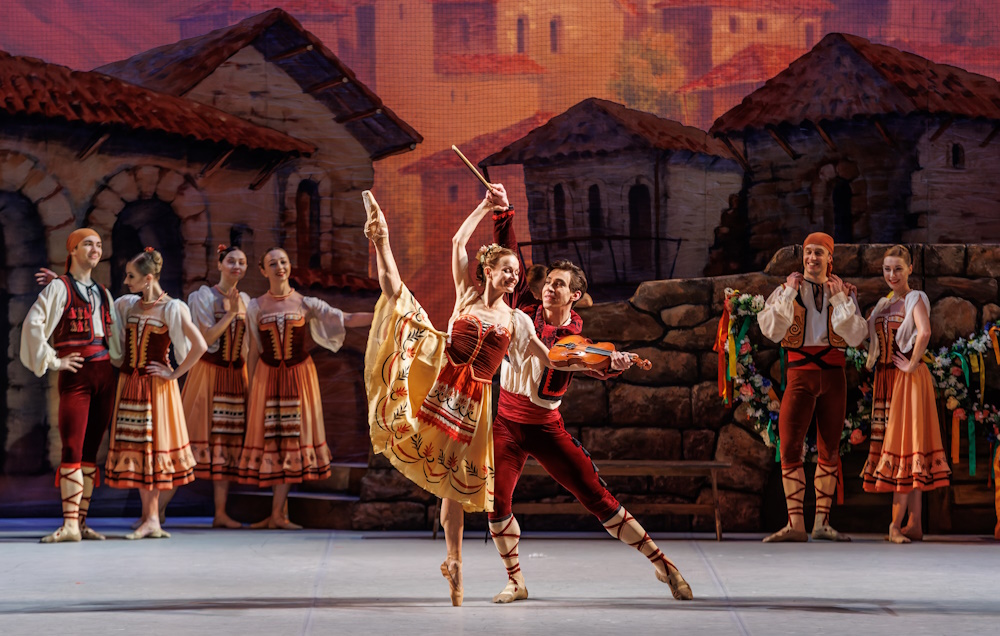
In the Spanish village of Fuente Ovejuna, all is merry animation as the villagers await the return of the Commander. As his campaign was a success, it is hoped that, contrary to his nature, the Commander will be kind and gracious. The villagers tease Laurencia and her sweetheart Frondoso. Laurencia also teases her ardent admirer. The violinist Mengo appears. Laurencia’s friend Pascuala asks him to play and get the young people dancing. The Commander appears. The people give him a cautious welcome, but he does not pay much notice: his attention is drawn to the beautiful Laurencia. Ordering everyone to disperse, the Commander detains only her. Her friend Pascuala remains with her. Laurencia rejects the Commander’s advances. Annoyed, the Commander orders his soldiers to bring Laurencia and Pascuala to his castle, but the girls manage to escape.
Scene two
Frondoso reveals his feelings to Laurencia, but the capricious girl responds evasively. Suddenly the Commander appears before Laurencia and tries to kiss her. Frondoso fearlessly throws himself at the Commander, saving Laurencia from her hated admirer. The Commander vows revenge on both of them. A group of girls come to the stream to wash clothes. They are more occupied with chatting than laundry, especially as Mengo also arrives. Jacinta runs in, chased by soldiers. Mengo defends Jacinta, but the soldiers knock him down. The Commander returns. Jacinta begs for his protection, but he hands her over to the soldiers. Laurencia, now convinced of Frondoso’s faithfulness, bravery and devotion, agrees to marry him.
Act two
Scene three
The whole village merrily celebrates Laurencia and Frondoso’s wedding. The merrymaking is interrupted when the Commander appears, looking sombre. He has come to take his revenge. He gives orders for Frondoso to be imprisoned and Laurencia to be taken to his castle. The people are horrified.
Scene four
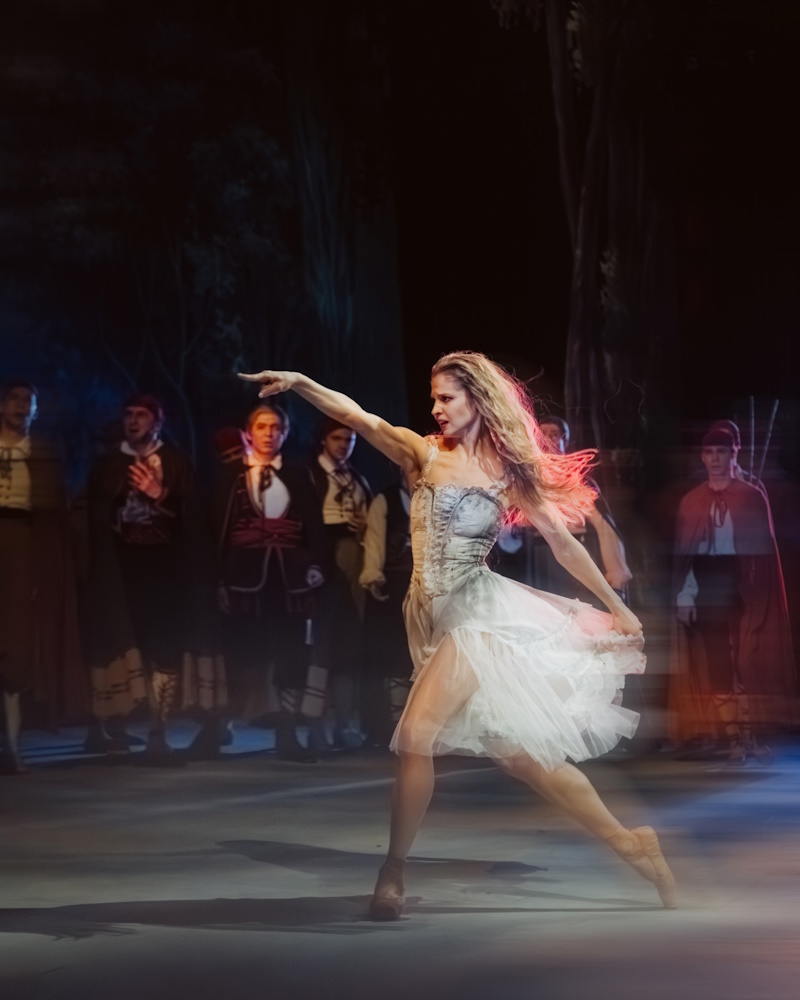
At night, the men gather in the forest. They know they must fight the tyrant, but from fear and indecision they merely clench their fists and utter curses. Laurencia enters unsteadily, battered and with her dress torn, but her will is strong and she is filled with fury. She shames the men for their inaction and calls on them to rise up and fight. Her impassioned call fills their hearts with courage. All the village women support Laurencia.
Scene five
Armed with knives, scythes, clubs, and sticks, the people storm in the inner rooms of the castle. They free Frondoso from incarceration and set off to get even with the Commander. He tries to flee, but the peasants capture him. He offers them gold to let him go, but is met by an indignant refusal. The dead tyrant’s helmet set up on the pole symbolizes the victory of the people of Fuente Ovejuna.